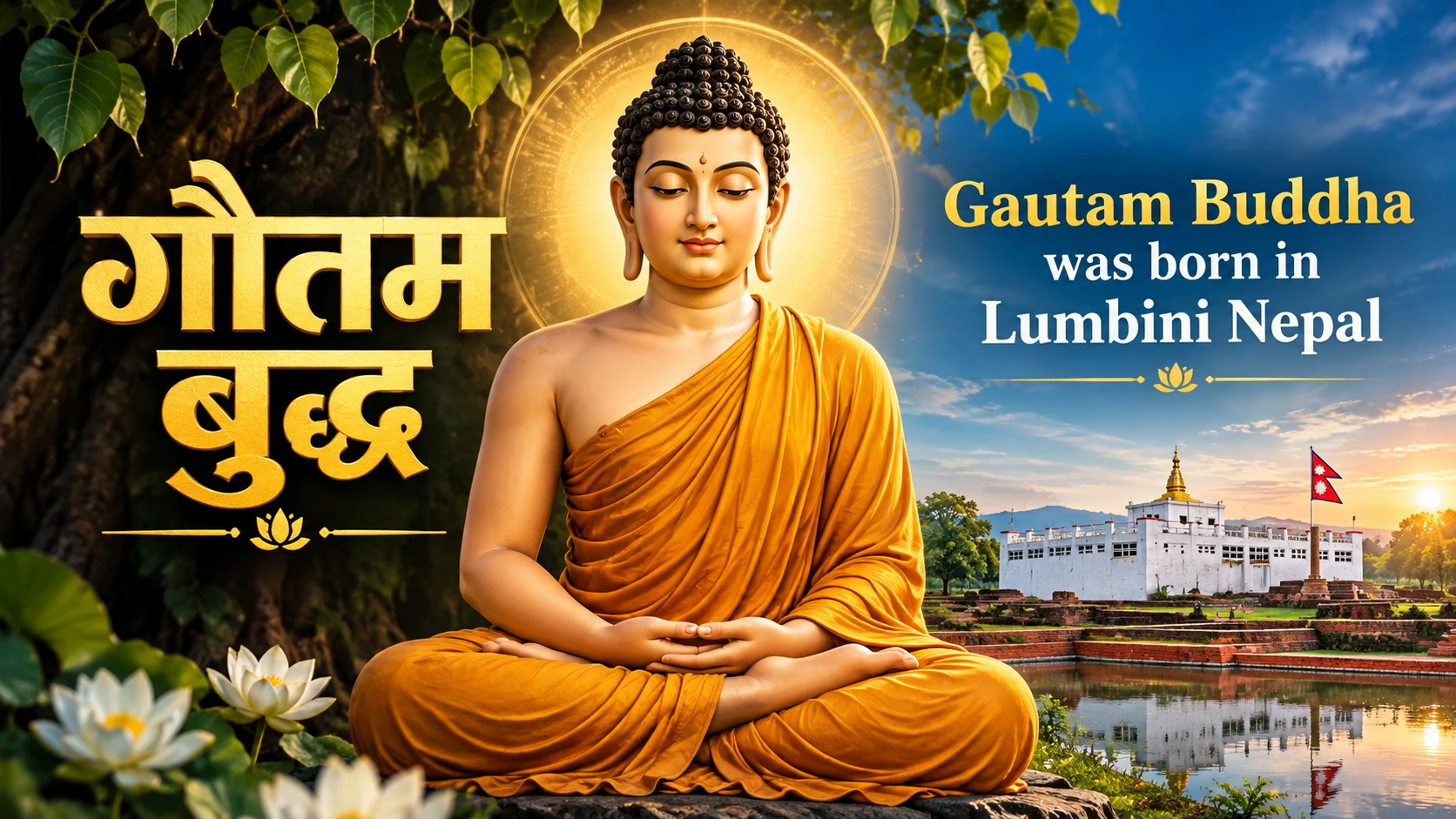
Gautam Buddha
Siddhartha Gautama(Gautam Buddha)
| Name | Siddhartha Gautama |
| Father | King Suddhodana |
| Mother | Queen MayaDevi |
| Birth | 563 BC (in Lumbini, Nepal) |
| Death | 483 BC (age of 80 years) |
| Known for | Founder of Buddhism; Four Noble Truths; Light of Asia |
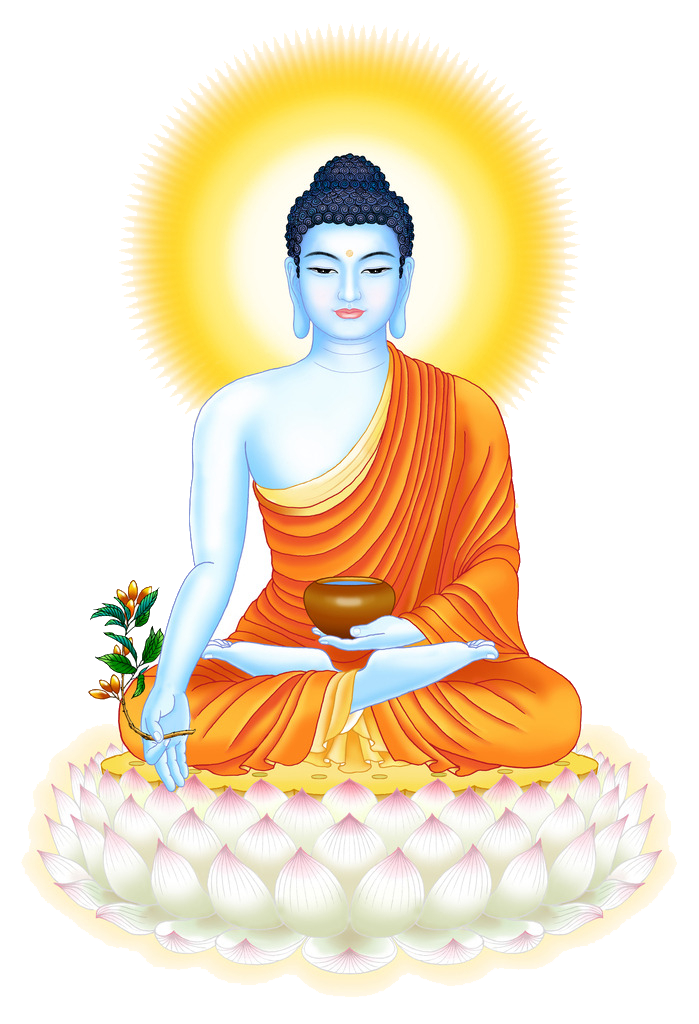
Gautama Buddha, born Siddhartha Gautama, was a spiritual teacher and philosopher whose life and teachings became the foundation of Buddhism, one of the world's major religions. He is revered by millions across Asia and beyond as the "Enlightened One," a title that reflects his attainment of a state of deep insight into the nature of suffering, impermanence, and liberation.
Birth and Early Life
Siddhartha Gautama was born into the Shakya royal family in Lumbini, a garden located in what is now southern Nepal, around the sixth century BCE. His father, King Śuddhodana, ruled over the Shakya kingdom, while his mother, Queen Maya Devi, passed away only a few days after giving birth to him. Following her death, Siddhartha was raised by his mother's sister, Mahaprajapati Gautami, who also became his stepmother.
As the heir to the throne, Siddhartha spent his childhood and youth surrounded by luxury within the walls of the royal palace. His father, wary of a prophecy suggesting the young prince might renounce royal life to become a wandering ascetic, shielded him from the harsh realities of old age, illness, poverty, and death, hoping to keep him content with palace life and eventually secure his succession to the throne.
Lifestyle
Within the palace, Siddhartha lived a life of comfort and privilege. He was educated in the arts, philosophy, and martial skills expected of a prince, and later married Yasodhara, with whom he had a son, Rahula. Despite this life of abundance, historical accounts describe Siddhartha as thoughtful and introspective even in his youth, often reflecting quietly on the nature of existence rather than being fully absorbed by the pleasures available to him.
The Turning Point in His Life
According to tradition, everything changed when Siddhartha, now in his late twenties, ventured beyond the palace walls and encountered what are known as the "Four Sights": an old man bent by age, a sick person suffering from illness, a corpse being carried for cremation, and finally a wandering ascetic who had renounced worldly life in search of peace. The first three sights revealed to him the universal truths of aging, sickness, and death that no amount of wealth or status could prevent, while the fourth sight — the calm ascetic — suggested a path beyond that suffering.
Deeply moved by these encounters, Siddhartha made the decision to leave behind his palace, his wife, his newborn son, and his royal inheritance. At the age of twenty-nine, he departed from the palace in what is traditionally called the "Great Renunciation," setting out to find an answer to the problem of human suffering.
Enlightenment
For the next several years, Siddhartha wandered as an ascetic, studying under various spiritual teachers and practicing extreme forms of self-denial and fasting, at one point reducing his food intake to near starvation. Finding that severe asceticism did not lead him to the answers he sought, he abandoned this extreme path in favor of what he later called the "Middle Way," a balance between indulgence and self-mortification.
Seated beneath a Bodhi tree in Bodh Gaya, in present-day India, Siddhartha entered a deep state of meditation, resolving not to rise until he had found the truth he was seeking. After a period of profound meditation, he attained enlightenment, gaining complete insight into the causes of suffering and the means to overcome it. From this point onward, he became known as the Buddha, meaning "the Awakened One."
Teachings
Following his enlightenment, the Buddha spent the remainder of his life traveling across the Indian subcontinent, teaching what he had realized. His core teaching is summarized in the Four Noble Truths: that suffering exists, that it arises from craving and attachment, that it can be ended, and that the path to its end is the Eightfold Path. This path outlines principles of right understanding, intention, speech, action, livelihood, effort, mindfulness, and concentration as a guide toward ethical living and inner peace.
The Buddha established a community of monks and nuns known as the Sangha to preserve and spread his teachings, and he continued to teach until his death, or Parinirvana, at around the age of eighty in Kushinagar. His teachings were later compiled into scriptures that form the basis of Buddhism, a tradition that continues to be practiced by hundreds of millions of people around the world today.



प्रतिक्रियाहरू (0)